 By Samantha Paul
Illinois is famous for Chicago’s towering skyscrapers, deep-dish pizza, Route 66, and Abraham Lincoln’s political legacy. Yet beyond these familiar attractions lies another interesting side of the Prairie State: a collection of laws that can make ordinary activities surprisingly complicated. Buying a car on Sunday, selling a brightly colored baby chick, or taking home a deer killed on the highway can all raise unusual legal questions.
Some Illinois laws sound as though they belong to a much earlier century. The state still has a criminal provision concerning dishonest claims about a racehorse’s identity. Other restrictions are thoroughly modern, covering private conversations, exotic animals, and fireworks displays.
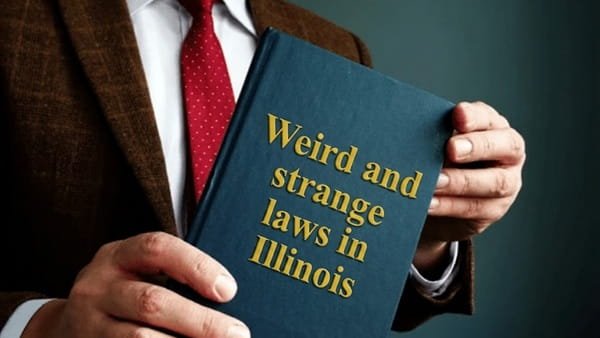
These rules developed for different reasons. Some reflect Sunday trading traditions, while others protect animals, consumers, and public safety. A few are simply official declarations that celebrate the state’s agricultural heritage.
Here are 10 weird and strange laws in Illinois, with their actual legal provisions, historical background, current status, and the exceptions that frequently disappear from online lists.
Unusual Shopping and Consumer Laws
1. Car Dealerships Cannot Sell Vehicles on Sunday — Illinois
The Core Rule: Illinois generally prohibits motor vehicle dealers from opening their businesses on Sundays for the purpose of buying, selling, trading, or offering vehicles for sale.
Legal Context & Reality Check: This restriction is a surviving example of America’s Sunday closing laws, commonly called blue laws. Such rules originally reflected religious observance and the expectation that businesses should close for a weekly day of rest. Under Illinois Vehicle Code Section 5-106, the restriction applies to covered motor vehicle sales and long-term leases. However, dealerships may conduct certain other activities on Sundays, including vehicle repairs, selling parts, providing towing services, and operating car washes. The law does not mean every automobile-related business must remain closed or that every private transaction involving a used car is automatically illegal. Although several states have relaxed their Sunday vehicle-sales restrictions, Illinois continues to maintain its own version.
- Legal Reference: Illinois Vehicle Code, 625 ILCS 5/5-106.
- Current Status: Active statewide restriction with specific exceptions.
2. Selling Artificially Colored Baby Chicks Is Illegal — Illinois
The Core Rule: Illinois prohibits selling, offering, or giving away artificially colored rabbits, baby chicks, ducklings, or other covered fowl as pets or novelties. It also prohibits awarding rabbits, ducklings, or baby chicks as prizes.
Legal Context & Reality Check: Brightly colored baby animals were once popular holiday gifts, especially around Easter. However, the practice raised concerns about animal welfare and people purchasing living creatures for temporary amusement. Illinois addressed these issues through its Humane Care for Animals Act. The restriction is broader than a simple ban on pink chicks. It also prohibits selling or giving away baby chicks and ducklings as pets or novelty items, even when they have not been artificially colored. The statute does not generally prohibit properly regulated poultry farming. A first violation is classified as a Class B misdemeanor, while subsequent violations can attract more serious penalties.
- Legal Reference: Humane Care for Animals Act, 510 ILCS 70/4.
- Current Status: Active statewide animal-welfare restriction.
Animals, Food, and Unusual Outdoor Rules
3. Horse Meat Intended for Human Consumption Faces a Ban — Illinois
The Core Rule: Illinois makes it unlawful to slaughter a horse while knowing, or having reason to know, its meat will be used for human food. The law also restricts buying, selling, possessing, or transporting horse meat intended for that purpose.
Legal Context & Reality Check: Horses occupy a special place in American sporting and agricultural culture, but Illinois has also enacted a detailed horse-meat statute. Lawmakers added the modern prohibition in 2007. The rule reaches beyond a shop displaying horse meat: it covers specified transfers and transportation when human consumption is intended. There are stated exceptions for certain noncommercial recreational or sporting activities and unrelated food production. The law should not be misstated as a universal ban on every conceivable act involving a dead horse. The key statutory issue is knowledge, or reason to know, that horse meat will be used for human consumption. A knowing violation is classified as a Class C misdemeanor.
- Legal Reference: Illinois Horse Meat Act, 225 ILCS 635/1.5.
- Current Status: Active statewide prohibition.
4. Keeping a Tiger or Monkey Is Generally Prohibited — Illinois
The Core Rule: Illinois generally forbids private possession of designated dangerous animals, including lions, tigers, bears, wolves, and numerous other wild species, as well as nonhuman primates.
Legal Context & Reality Check: A pet tiger sounds like an extravagant status symbol, but it can create life-threatening safety and welfare problems. Illinois lists covered dangerous species in its criminal code and limits possession to qualifying places such as properly maintained zoos, federally licensed exhibits, scientific institutions, veterinary hospitals, and approved refuges. The precise statutory categories matter: it is not accurate to say every unusual reptile is regulated by this single section, because Illinois has separate herptile laws. Nor is every institution automatically exempt just because it exhibits animals. This is an active restriction on ordinary private ownership, not a claim that a householder can simply purchase a tiger with enough money.
- Legal Reference: Criminal Code of 2012, 720 ILCS 5/48-10.
- Current Status: Active statewide restriction with institutional exceptions.
5. Taking Home Road-Killed Deer Comes With a 24-Hour Deadline — Illinois
The Core Rule: Illinois allows qualifying individuals to claim deer killed in vehicle collisions, but they must report the possession to the Department of Natural Resources within 24 hours.
Legal Context & Reality Check: The state’s roadkill rules are far more detailed than the casual phrase ‘finders keepers.’ Administrative regulations provide that only qualifying Illinois citizens who are not delinquent in child support may possess or transport such deer. The driver involved in the collision receives priority. A claimant reports identifying details and receives a report identification number to retain while possessing the animal or its parts. Contrary to an often-repeated claim, a separate salvage tag is not required for an eligible road-killed deer under this rule. The point is to record lawful possession and distinguish collision salvage from illegally taken wildlife. Other health and transport rules may still matter.
- Legal Reference: 17 Illinois Administrative Code § 750.10.
- Current Status: Active administrative salvage requirements.
Public Safety and Personal Choices
6. A Backyard Fireworks Show May Require Training and a Permit — Illinois
The Core Rule: Illinois generally prohibits unauthorized possession or use of covered consumer fireworks. A lawful consumer fireworks display requires approval, including operator training and a permit issued through the local jurisdiction.
Legal Context & Reality Check: A supermarket display of party products should not be mistaken for permission to set off aerial fireworks in the backyard. The Illinois Pyrotechnic Use Act and State Fire Marshal rules establish a formal permit system. The operator must meet training requirements; the fire chief inspects the site before approval. State rules also specify an outdoor separation distance of at least 200 feet from spectators, structures, and property lines. Certain novelty products are treated separately, so ‘every sparkler is illegal’ is not a reliable summary. Municipal rules may be stricter. The legal difference is between an authorized display and casually lighting covered fireworks without the required permission.
- Legal Reference: Pyrotechnic Use Act, 425 ILCS 35/2 and 2.2; 41 Ill. Adm. Code §§ 235.90 and 235.100.
- Current Status: Active permit and display rules.
7. A Parent Cannot Simply Authorize a Minor’s Tattoo — Illinois
The Core Rule: Illinois generally makes it unlawful for a person other than a fully licensed physician to knowingly or recklessly tattoo someone under 18. A parent’s consent does not create a general exception for tattoo artists.
Legal Context & Reality Check: Some states allow teenagers to receive tattoos with signed parental permission. Illinois is stricter, and its law goes beyond the procedure itself: minors generally may not enter or remain on tattoo-business premises where tattooing is performed unless accompanied by a parent or legal guardian. This does not prohibit a parent from bringing a teenager into every business that happens to display tattoo artwork; the section addresses premises where tattooing is actually performed. The physician exception is also not an invitation to treat ordinary tattoo shops as medical clinics. The law reflects concern about permanent body alterations and informed consent, while separate rules cover licensed tattoo facilities and hygiene.
- Legal Reference: Criminal Code of 2012, 720 ILCS 5/12C-35.
- Current Status: Active age-based criminal prohibition.
8. Secretly Recording a Private Conversation Can Be Illegal — Illinois
The Core Rule: Illinois generally prohibits surreptitiously recording a private conversation without the consent of all parties, even when the person making the recording is part of the conversation.
Legal Context & Reality Check: Illinois is frequently described as an ‘all-party consent’ state, but the word private is essential. Its eavesdropping law concerns private conversations in circumstances where privacy is reasonably expected, not every remark heard on a public sidewalk. The statute also contains specific exceptions and defenses, including authorized law-enforcement activity. The modern wording followed litigation and reforms in 2014 that narrowed an earlier, overly broad law. Secretly recording a confidential discussion can therefore carry legal risks, but ordinary public filming is not automatically a violation of this provision. The distinction between covert recording and lawful documentation matters.
- Legal Reference: Criminal Code of 2012, 720 ILCS 5/14-2.
- Current Status: Active prohibition for covered surreptitious recordings.
Historic Sports Rules and Official State Symbols
9. Racing a Horse Under the Wrong Name Can Be a Felony — Illinois
The Core Rule: Illinois criminalizes knowingly entering or competing with a horse under an improper name or class in certain contests of speed offering a purse or prize.
Legal Context & Reality Check: This wonderfully specific rule comes from the era when horse racing and agricultural competitions were essential parts of local entertainment. A disguised horse’s identity could allow an experienced competitor to enter a weaker class or deceive people who relied on its racing record. Under Section 48-6, the horse’s competition name is generally the one under which it has publicly performed, with changes allowed under the governing association’s printed rules. The law applies to specified prize competitions, not to everyday nicknames for a family horse. A knowing violation of the core false-entry prohibition is a Class 4 felony. Illinois also separately criminalizes certain false statements about breeding pedigrees.
- Legal Reference: Criminal Code of 2012, 720 ILCS 5/48-6; see also § 48-9.
- Current Status: Active published criminal provision.
10. Pumpkin Pie Is Officially the State Pie — Illinois
The Core Rule: Illinois law designates pumpkin pie as the official state pie. It is a ceremonial designation, not a requirement that households serve it or that bakeries stock it.
Legal Context & Reality Check: Illinois is a major center of pumpkin production, and lawmakers gave the crop a place of honor in the State Designations Act. The provision took effect on January 1, 2016, after Public Act 99-364. The statute is almost comically brief: it simply names the state’s official pie. No one faces a penalty for ordering apple pie, and the law does not attempt to regulate how pumpkin filling should taste. Illinois has also designated popcorn as its official state snackfood, which reinforces the state’s habit of using legal symbols to celebrate its agricultural economy. This entry is an official legislative oddity rather than a criminal offence.
- Legal Reference: State Designations Act, 5 ILCS 460/100.
- Current Status: Active honorary state designation; no criminal penalty.
Conclusion
Illinois’s strangest laws reveal more than eccentric legislative drafting. Sunday car-sales restrictions preserve an older approach to commerce, while rules about colored chicks, exotic animals, and horse meat reflect animal welfare and food-policy concerns. Fireworks permits, tattoo restrictions, and eavesdropping provisions address very real safety and privacy issues.
The essential lesson is to read the actual rule rather than repeat a viral headline. Claiming a road-killed deer is not automatically unlawful, but reporting conditions apply. Illinois does not prohibit every public recording or every novelty firework in precisely the same way. And naming pumpkin pie as a state symbol is not the same as ordering residents to eat it. The legal details make these genuine Illinois oddities far more interesting than unsupported myths.