 By Samantha Paul
A disputed subscription charge or an unfulfilled home-improvement agreement may start as a disagreement with one company. When the business refuses to address the problem, however, a Connecticut consumer can ask the Attorney General’s Office to review the complaint. Its Consumer Advocacy Section offers informal assistance and can identify matters that warrant referral or broader attention. That service is not the same as hiring a lawyer, and filing does not guarantee reimbursement.
Here are the current attorney general’s name, official contact details, the correct online complaint route, and the practical steps for submitting useful evidence.
Who Is the Current Attorney General of Connecticut?
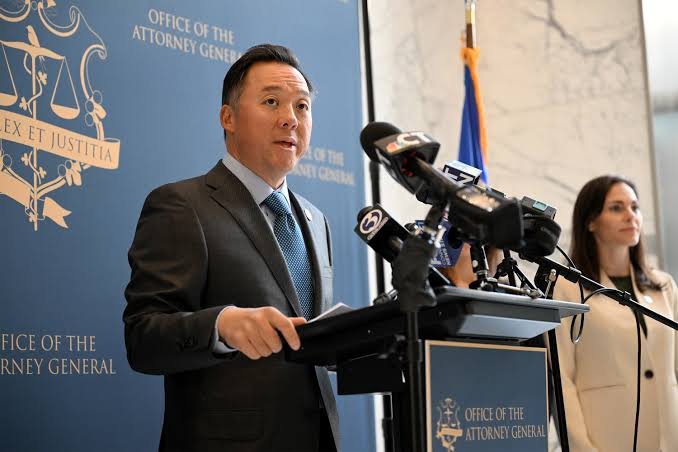
William Tong is Connecticut’s attorney general. He has served since January 2019 and heads an office that represents the state’s legal interests, enforces consumer-protection laws, and pursues civil litigation on behalf of the public. The office does not prosecute ordinary criminal cases or serve as private counsel for residents.
The Consumer Advocacy Section operates an informal mediation program covering eligible disputes involving purchases, services, and financial transactions. Participation by the business is voluntary; the division specifically says that poor customer service by itself is not a matter it handles.
Connecticut Attorney General Contact Numbers
Use the appropriate line rather than sending a consumer complaint to an unrelated program.
General office: (860) 808-5318 — the attorney general’s published main number.
Consumer Assistance Unit: (860) 808-5420 — questions about complaints and assistance.
General email: Attorney.General@ct.gov — general correspondence, not a replacement for the online complaint intake where that is available.
Office fax: (860) 808-5387 — published general office fax number.
Office website: https://portal.ct.gov/ag/ — official resources and filing links.
Visitors to the Hartford office should make an appointment and be prepared to show identification. Complaints and other correspondence can be subject to Connecticut’s Freedom of Information Act.
Connecticut Attorney General Office Address
Street address: Office of the Attorney General, 165 Capitol Avenue, Hartford, CT 06106.
Published mailing address: Office of the Attorney General, 165 Capitol Avenue, P.O. Box 120, Hartford, CT 06141-0120.
For a consumer complaint, the state recommends its electronic complaint process. Call the Consumer Assistance Unit if you need to confirm how to submit a non-English paper form or supporting materials.
How to File a Complaint With the Connecticut Attorney General
Step 1: Open the Attorney General’s official complaint page
Go to https://portal.ct.gov/ag/common/complaint-form-landing-page and select “File a Complaint.” The online complaint is a separate process from sending an ordinary email. The office currently accepts its electronic complaint form in English; downloadable forms are listed in Spanish, Portuguese, Polish, Italian, Haitian Creole (French), and Chinese.
Step 2: Check which state office handles your issue
The attorney general can examine potential unfair or deceptive marketplace behavior, but certain matters belong elsewhere. The Department of Labor handles unpaid-wage complaints; the Commission on Human Rights and Opportunities handles discrimination complaints; and criminal complaints ordinarily go to the Division of Criminal Justice. Regulated services may also fall within the Department of Consumer Protection or another specialized regulator. Selecting the proper agency may avoid an unnecessary delay.
Step 3: Assemble the transaction record
Write down the business’s legal or trading name, address, dates of purchase and delivery, the disputed amount, promises made, and the steps you already took with the company. Keep copies of contracts, invoices, messages, advertisements and payment records. A chronological explanation is more useful than simply calling a company fraudulent.
Step 4: Describe the desired outcome and review privacy implications
Explain what resolution you requested, including a refund, repair or correction, but distinguish your request from an outcome the state can require. The Attorney General warns that material submitted may become public information under state disclosure laws. Remove unnecessary account numbers and other sensitive identifiers from attachments.
Step 5: Submit and preserve your complaint details
Complete the electronic form and keep any confirmation. If an assigned staff member later asks for more evidence, email that person with the business’s name and your case number in the subject line. The office specifically advises updating an existing complaint rather than opening a duplicate electronic complaint.
What Happens After You File a Complaint?
The Consumer Advocacy Section may offer informal mediation, refer the issue to another agency, or use complaint information to identify conduct affecting the wider public. Its mediation depends on cooperation, so the Attorney General cannot promise that the business will agree to the proposed resolution. The office also cannot give private legal advice or represent the individual who submits the complaint.
If you are considering a chargeback, small-claims action or lawsuit, track those deadlines separately. Filing a consumer complaint does not by itself halt a private legal claim’s time limit.
Frequently Asked Questions
Q. Can I complain about a subscription that was difficult to cancel?
Yes, potentially. Connecticut has consumer protections concerning automatic renewals and cancellations. Identify the renewal date, how the cancellation was attempted, and charges after that request, then select the relevant consumer complaint subject.
Q. Can I add documents after the complaint is assigned?
Yes. Send them directly to the assigned staff member and include the business name and case number. Do not create another electronic complaint merely to attach more evidence.
Q. Is everything I submit confidential?
Not necessarily. Connecticut states that submissions may be public records under its Freedom of Information Act. Include the records necessary to describe the dispute, but do not send unrelated personal or financial data.
Q. Will the Attorney General take my case to court for me?
No. The office represents the public interest rather than individual complainants. Mediation and referrals may help, but you need independent legal advice for a personal lawsuit or an approaching deadline.
 Amelia Anderson