 By Samantha Paul
An unexpected shove on a crowded train, an unauthorized medical procedure, or a deliberate slap can raise the same legal question: when does physical contact become battery? In United States law, battery generally involves intentional harmful or offensive contact with another person without valid consent or legal justification. The law protects more than freedom from physical injury; it also protects a person’s right to control who touches their body. That is why even contact that leaves no bruises or lasting damage may support a civil battery claim. Depending on the jurisdiction and circumstances, the same conduct may also lead to criminal prosecution, although some state statutes classify the offense under the term assault. Understanding the distinction between civil and criminal battery, and the roles of intent, consent, and lawful defenses, helps explain when unwanted contact creates legal responsibility.
Battery in Tort Law vs. Criminal Law
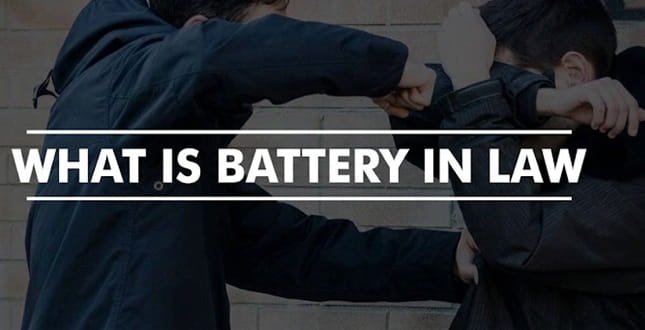
Civil battery is an intentional tort protecting bodily integrity and personal autonomy. An injured or offended person may sue the individual responsible, usually seeking monetary compensation. A civil claim is generally decided under the preponderance-of-the-evidence standard.
Criminal battery is prosecuted by the government to punish unlawful conduct and protect public safety. The prosecution must prove the statutory offense beyond a reasonable doubt. State definitions differ: some criminal codes retain a separate battery offense, while others use “assault” to cover unlawful physical contact.
Assault and battery are not interchangeable at common law. Assault involves intentionally causing reasonable apprehension of imminent harmful or offensive contact; the contact need not occur, and apprehension does not necessarily mean fear. Battery requires the contact itself, even if the person never saw it coming. Modern criminal statutes may combine or redefine these offenses.
The Core Elements of Civil Battery
- Intent. The defendant must act voluntarily and with the required intent, not merely cause an accidental collision. Intent may mean a purpose to cause contact or knowledge that contact is substantially certain. Many jurisdictions use a single-intent approach, requiring intent to make the contact; others require dual intent, including an intent that the contact be harmful or offensive. Criminal statutes have their own mental-state requirements: general intent often suffices, but some offenses specify an intent to injure or permit liability for reckless conduct.
- Contact or touching. Direct skin-to-skin contact is unnecessary. A thrown object, a stick, or another instrument can cause battery. Contact with clothing, a cane being held, or a plate in someone’s hand may qualify because those objects are closely connected to the person. Contact may also be indirect, such as deliberately setting something in motion that hits someone.
- Harmful or offensive contact. Harmful contact causes physical injury, pain, or bodily impairment. Offensive contact violates an ordinary person’s reasonable sense of personal dignity. An intentional humiliating touch can therefore be actionable without bruises or medical bills. Context matters: everyday incidental contact is not automatically offensive.
- Absence of valid consent or justification. Permission can make contact lawful, but it must cover the conduct involved. A person who agrees to a handshake has not agreed to being slapped. Courts differ on whether lack of consent must be proved as part of the plaintiff’s case or whether consent is raised as a defense. Permanent injury is not necessary for civil battery.
Recognized Legal Defenses
Consent. Consent may be express, such as agreeing to an examination, or implied through conduct and ordinary social custom. Sports participants generally accept contact inherent in the game, not every deliberate blow outside its rules. Consent obtained by legally significant deception or coercion may be ineffective.
Self-defense and defense of others. Reasonable force may be used when a person reasonably believes it is necessary against an imminent unlawful threat. The response must be proportionate; a minor push seldom justifies deadly force. Rules about initial aggressors, safe retreat, stand-your-ground protections, and deadly force vary by state.
Defense of property. Reasonable, usually non-deadly force may be justified to prevent unlawful interference with property. Deadly force is generally not permitted solely to protect possessions; distinct rules may apply when a person faces a qualifying violent threat.
Parental discipline. Some states recognize a limited privilege for parents or guardians to use reasonable, moderate force for discipline or protection. Excessive punishment and child abuse are not protected, and the boundaries are state-specific.
Law enforcement. Officers may use legally authorized, objectively reasonable force while performing duties such as an arrest. Their badge is not a blanket defense to excessive force. The Supreme Court’s Fourth Amendment standard in Graham v. Connor governs excessive-force claims arising from arrests and similar seizures.
Everyday Examples and Landmark Cases
Medical treatment: A patient consents to surgery on one knee, but a surgeon intentionally operates on the other without authorization or an applicable emergency exception. A battery claim may arise. By contrast, inadequate disclosure of treatment risks is often analyzed as negligence rather than battery.
Crowded transit: Two commuters brush shoulders when a train stops suddenly. That ordinarily is not battery. Deliberately shoving someone to humiliate or injure them may be.
Contact sports: A lawful tackle during a football game is ordinarily within implied consent. Punching an opponent after play has stopped may fall outside that consent.
Garratt v. Dailey, 46 Wash. 2d 197 (1955): A young child moved a chair before a woman sat down and fell. The Washington Supreme Court explained that intent could exist if the child knew with substantial certainty that she would attempt to sit where the chair had been; it remanded for a factual finding.
Fisher v. Carrousel Motor Hotel, Inc., 424 S.W.2d 627 (Tex. 1967): A hotel employee snatched a plate from a guest’s hand during a discriminatory confrontation. The Texas Supreme Court recognized battery even though the employee did not touch the guest’s body, because the plate was closely connected to him.
Civil Remedies and Criminal Consequences
Civil remedies include nominal damages to recognize an unlawful invasion of personal dignity even without proven financial loss. Compensatory damages may cover medical bills, lost wages, pain, emotional distress, and other proven losses. Punitive damages may be available for particularly malicious or outrageous conduct, subject to applicable state law.
Criminal consequences depend on the statute and circumstances. Less serious offenses may be misdemeanors carrying fines, probation, or jail time. Felony or aggravated charges may apply when a deadly weapon is used, serious injury occurs, or certain protected or vulnerable victims are targeted. Penalties and classifications differ substantially among states. A single incident can produce both a criminal prosecution and a separate civil lawsuit.
Frequently Asked Questions
Q. Can someone sue for battery if police decline to bring charges?
Yes. A civil lawsuit does not depend on an arrest or conviction. Prosecutors decide whether to pursue criminal charges, while an individual may bring a civil claim under a lower standard of proof, subject to filing rules.
Q. What evidence is useful when there is no visible injury?
Witness accounts, security footage, messages, photographs, and prompt notes about the incident may help establish intent, contact, and lack of consent. Medical records can support an allegation of pain, but are not always necessary.
Q. How long does someone have to file a civil battery lawsuit?
The deadline depends on state law and may differ from that for negligence claims. Special rules can apply to minors, delayed discovery, and claims against government defendants. Missing the deadline may bar the case.
Q. Can a business be liable when an employee commits battery?
Sometimes. An employer may be responsible when the misconduct occurs within the scope of employment, or for its own negligent hiring or supervision. An employee’s purely personal attack does not automatically make the employer liable.